Navigate the Cerebral Organoid Landscape
Exploring Cerebral Organoid Research in Neuroscience
Over the past decade, cerebral organoids have transformed how we study the brain. Derived from stem cells, these 3D “mini-brains in a dish” recapitulate early neurodevelopmental processes and provide an ethical, species-relevant alternative to traditional animal models. Cerebral organoids are now applied across neurodevelopment, neurodegeneration, and neuro-oncology – enabling disease modeling, drug screening, and personalized insights in a controlled, human-specific setting.
About OrganoidMap
OrganoidMap is an open-access, interactive web application designed to help researchers, clinicians, students, and anyone interested in cerebral organoid research navigate this rapidly growing field. Whether you are new to the topic or searching for a model to support a specific study, OrganoidMap offers a streamlined interface to explore approximately 800 systematically curated publications from the past decade.
Vision
We envision a future where cerebral organoids are a standard component of both preclinical research and clinical decision-making – serving as functional precision medicine tools that optimize patient stratification, personalize therapy, and close the translational gap between bench and bedside.
Mission
We aim to empower the neuroscience and biomedical research community with an accessible, high-quality tool for exploring and comparing cerebral organoid models. OrganoidMap supports informed model selection, promotes transparency in experimental design, and helps researchers navigate the expanding field.
How to Use OrganoidMap
Quick Search for First Impressions
Use the search bar at the top of the page to look up terms of interest – such as a specific disease, gene, model type, or keyword. This is ideal for initial exploration and gaining a broad overview.
Filter Options for Detailed Exploration
Use the filter panel to narrow down studies based on predefined categories. This is best for targeted queries or when looking for specific model features. Results display in a sortable table.
Explore the Data Visually
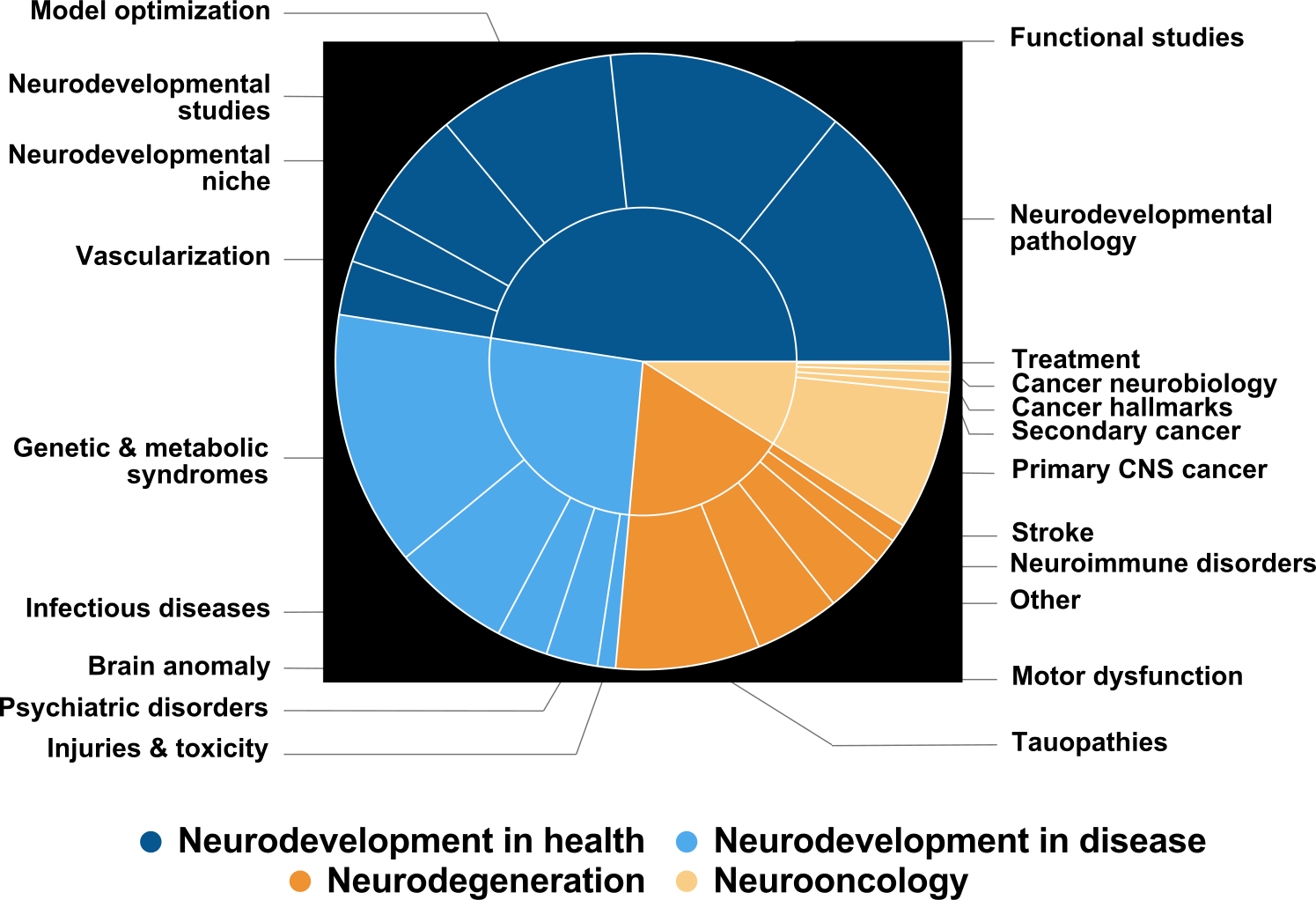
To help you quickly grasp the structure and scope of the dataset, OrganoidMap includes an interactive pie chart visualization. This dynamic interface provides an overview of included studies by group, subgroup, research focus, model type and cell origin. Simply hover over any pie segment to reveal more detail, and click to filter – all charts update automatically, making it easy to track patterns and explore cross-category relationships. Combined with the interactive data table, this feature supports informed, precise, and translationally relevant model selection – all in one place.
Dataset
Abbreviations


© 2025 Anna Wolfram & Maik Wolfram-Schauerte
Design & Development by Caroline Trust